
Market Liquidity in Live Betting: How It Changes the Fairness of Odds
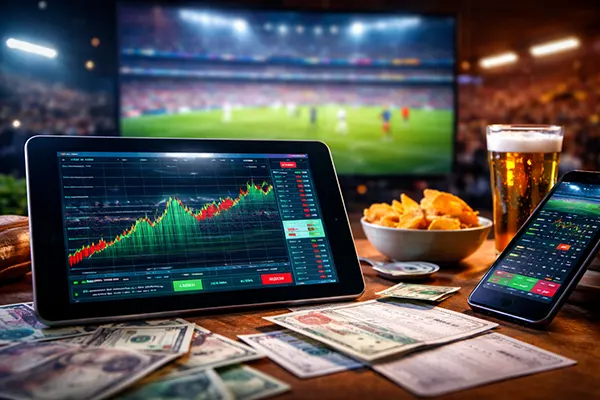
In live (in-play) sports betting, odds can change several times within a single minute. Most punters notice the movement, but far fewer understand the engine behind it: liquidity. Liquidity is simply how much money can be matched at different prices without the odds swinging wildly. When liquidity is high, prices tend to be steadier and closer to “consensus probability”. When it is low, the same match can look “cheap” or “overpriced” depending on timing, stake size, and how quickly information reaches the bookmaker.
What liquidity means in live betting (and how it looks in practice)
Liquidity is the amount of actionable demand and supply available at each price point. In betting terms, it’s the volume that can be taken at a given line before the bookmaker (or exchange market) needs to move the odds. A highly liquid live market absorbs normal-sized bets with minimal impact; a thin market reacts sharply, because even modest money shifts the risk profile.
You see this difference most clearly across competitions. A top-tier football match on a Saturday afternoon usually has deeper action across 1X2, Asian handicap, totals, and player markets. A lower-division match, a youth tournament, or a niche eSports map market often has far less depth. In the thin case, a small cluster of bets can trigger a noticeable drift or crash in the price, even if nothing meaningful has happened in the game.
Liquidity also changes during the same match. Early minutes can be more stable, then key moments—red cards, injuries, substitutions, VAR checks, weather shifts—create bursts of information. The market tries to re-price instantly, but if only a few participants are active (or limits are tight), the resulting price can be jumpy and, at times, less “fair” in the sense of reflecting the true underlying probability.
Why live liquidity is more fragile than pre-match liquidity
In-play pricing depends on speed and confidence in the data. Bookmakers rely on live feeds and must constantly manage latency differences. If the operator suspects its view of the match is delayed versus what some bettors are seeing, it may reduce limits, suspend markets, or widen margins to protect itself. Those protective moves reduce tradable liquidity at the very moment punters want action most.
Another fragility is model uncertainty. Pre-match prices can lean on long-run team strength, injuries, and historical patterns. In-play models are forced to update in real time with noisy, partial information (tempo, shots, territory, game state, time remaining). When uncertainty rises, risk controls tighten, liquidity drops, and the odds you see may include a bigger safety buffer.
Finally, live betting attracts a different mix of participants. Some bettors specialise in timing and information. Others bet casually while watching. In a thin market, the better-informed side can dominate the flow and push prices quickly. That speed can be rational, but it also means a regular punter may experience “unfair” odds simply because they arrive a few seconds late.
How liquidity changes the fairness of odds
Fairness in odds is often described as “how close the price is to the true probability”. In real betting markets, you never see pure probability; you see probability plus margin (the overround) and sometimes extra cushioning for volatility and data risk. Liquidity influences both. In deeper markets, competition and the ability to hedge tend to keep prices closer to consensus. In thin markets, the bookmaker needs more protection, so the cushion grows.
One practical sign is the effective spread between related outcomes. For example, compare Over and Under on the same live total, or both sides of a handicap. In liquid conditions, the gap is tighter. In low liquidity, the gap widens—meaning you pay more friction to enter the bet, and the implied probabilities can look less balanced even if the game state has not changed.
Price impact is another fairness issue. If your stake moves the market materially, you are not only paying the margin; you are also paying your own footprint. The odds you take may be worse than the odds that were briefly available. That is not necessarily personal targeting; it is what happens when depth is limited and the operator needs to rebalance exposure immediately.
Limits, suspensions, and the hidden cost of volatility
In 2026, many reputable operators use automated in-play risk management: limits vary by sport, league, and market type; markets are suspended around key events; and prices are refreshed rapidly. These mechanisms protect the book against stale information and sudden exposure, but the side effect is lower available liquidity for customers exactly when a match becomes most interesting.
Suspensions are often misunderstood. A sudden stop is not automatically suspicious; it can be a routine integrity and latency control. Around goals, penalties, VAR reviews, or injuries, the information advantage can flip quickly. Pausing a market is one of the simplest ways to prevent bettors from taking a price that no longer reflects what is happening on the pitch.
Volatility also increases the practical cost even if the headline overround looks similar. When a market is bouncing, your ability to compare prices is reduced, offers may be available for shorter windows, and any delay between click and acceptance matters more. In thin conditions, acceptance friction becomes part of the price you pay.
How to judge liquidity and odds fairness during live play
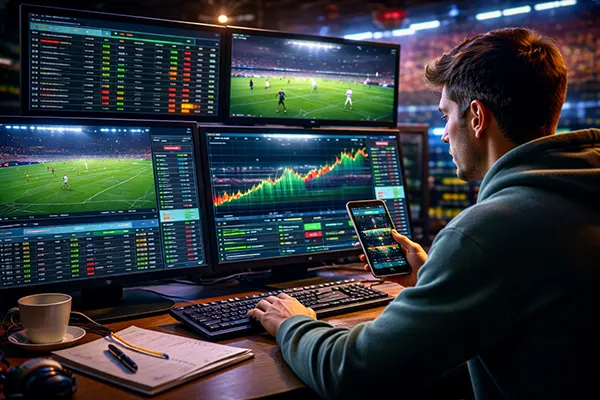
You can’t see a bookmaker’s internal risk book, but you can read the surface signals. First, watch how often the odds refresh and whether both sides of a market stay available. Frequent suspensions, long acceptance times, or repeated re-quotes usually indicate the operator is defending against latency or sudden information risk—conditions that typically coincide with reduced liquidity.
Second, compare related markets rather than staring at a single number. If the 1X2 is moving, check whether totals and handicaps move consistently. In a healthy, liquid environment, different markets tend to re-price in a coherent way. When liquidity is thin, you may see mismatches: one market updates quickly while another lags, or prices look out of sync with the match state.
Third, consider competition quality and match coverage. Lower visibility events (fewer cameras, weaker data coverage, smaller audiences) generally have thinner live liquidity. That doesn’t mean you cannot bet them, but it does mean you should expect wider margins, more abrupt moves, and more frequent suspensions.
Integrity signals and why they matter for “fair” live odds
Integrity monitoring affects liquidity because it changes how comfortable operators are in taking action. Suspicious patterns, unusual staking bursts, or mismatched pricing relative to other sources can trigger tighter limits or more conservative margins in certain sports, leagues, or regions. Even when a specific match is clean, the overall integrity environment influences how aggressively a bookmaker is willing to trade in-play.
From a punter’s perspective, the main point is practical: when the operator believes the information environment is uneven, liquidity gets rationed. That rationing can show up as smaller max stakes, more cautious pricing, or fewer niche live markets offered for that event. The odds can feel less fair because they include extra protection against being picked off by faster or better-informed bettors.
If you want a simple rule that holds up in 2026: treat thin live markets like a wide bid–ask spread in finance. Wider spreads signal lower liquidity and higher transaction cost. In betting, that cost is embedded in the margin, the acceptance friction, and the speed at which the line moves away from you. The most “fair” live pricing tends to appear where depth is high, information is reliable, and pricing competition is strongest.
Read also
-
 Pressing Intensity and Betting: How High Pressing Shapes ...
Modern football has shifted towards aggressive defensive structures, and high …
-
 “Team to Score 2+ Goals”: How to Combine It Correctly wit...
The market “team to score 2+ goals” is widely used …
-
 Betting on Fouls: How to Build a Forecast Without Relying...
Fouls betting has become one of the most underestimated yet …
-
 Healthy Gaming Habits in 2026: Balancing Casino Play and ...
Responsible gambling in 2026 is no longer limited to deposit …